
EV Recovery: What Happens When Your Battery Runs Low
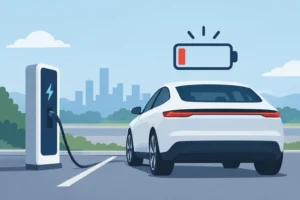
A warning light, a charging fault or a battery that will not take a charge can leave an electric vehicle stranded just as effectively as an engine failure. EV recovery needs a little more thought than moving a conventional car, particularly if the vehicle cannot be driven, has suffered accident damage or is showing an electrical fault. The right equipment and a clear handover make the difference between a straightforward collection and an avoidable delay.
For drivers in Essex and across the UK, the practical answer is usually a flat-bed recovery lorry with an onboard winch. It keeps the vehicle off the road, avoids unnecessary mileage and gives the recovery operator control when the car will not select drive, cannot be charged or has a wheel issue.
Why EV recovery is different
Electric cars are not fragile, but they are engineered differently. Their high-voltage battery pack is normally mounted low in the vehicle floor, adding significant weight and affecting how the vehicle should be lifted, secured and transported. A recovery operator needs to know the model, its condition and whether it can be moved under its own power before arriving.
The biggest mistake is assuming every EV can simply be towed with two wheels on the ground. Many electric vehicles should not be moved this way because the driven wheels can turn the electric motor and potentially cause damage. Some models have a dedicated transport or tow mode, while others require all four wheels to be off the road. Manufacturer instructions always take priority, but a flat-bed is often the safest option where there is any doubt.
There is also the question of battery state. A low traction battery does not necessarily mean the vehicle is unsafe, but it may mean there is not enough charge to manoeuvre it onto a lorry. If the car is completely flat, locked in park or unable to release its electronic handbrake, winch loading may be required.
When to arrange a flat-bed for an electric vehicle
A flat-bed recovery is a sensible choice after a breakdown, accident, puncture, charging failure or failed journey. It is also useful when an EV has been bought online, collected from a dealer, moved at the end of a lease or transported to a specialist workshop.
If your EV still drives and has sufficient charge, it may be possible to load it under its own power. That can be quicker, but it is not always the best approach. A vehicle displaying warning messages, making unusual noises or involved in a collision should not be driven simply to get it onto a transporter. The priority is protecting the vehicle and everyone around it.
Non-runners are not a problem when the recovery lorry has a suitable winch. The car can be carefully drawn onto the bed without needing the motor running. This is particularly useful for EVs that have shut down, have a failed 12V battery, are stuck in park or have been standing for a long period.
What to tell the recovery operator before collection
Good information prevents wasted time. When requesting EV recovery, give the make, model, registration and collection postcode, then explain exactly what has happened. Say whether the car will power on, select drive, steer, roll freely and release the parking brake. Mention any dashboard warnings and whether it has been involved in an impact.
It also helps to confirm the battery charge level, even if the figure is only an estimate. A car with 10 per cent charge is different from one that is fully depleted, and an operator can plan the loading method accordingly. If you know the vehicle has a transport mode or a specific recovery procedure, have the handbook available or pass on the details before collection.
Be clear about the collection location too. A vehicle on a driveway is usually simple to access. One in a multi-storey car park, underground bay, narrow lane or live roadside situation may need a different approach. Height restrictions, locked gates, wheel damage and missing keys can all affect the job. Straight answers at the booking stage lead to an accurate quote and the right vehicle being sent.
Battery damage after an accident
An EV involved in a collision needs extra care, especially where there has been damage beneath the car or around the battery area. Do not touch any exposed orange cables, connectors or damaged battery components. Keep clear of smoke, hissing, heat, leaking fluid or a strong unusual smell, and call emergency services if there is an immediate safety concern.
A recovery operator should be told about the impact before attending, even if the car appears fine. Accident damage is not always obvious from the outside. The vehicle may need to be isolated, loaded with additional precautions and delivered to a repairer, manufacturer-approved bodyshop or secure storage location rather than driven away.
This does not mean every damaged EV is a major hazard. It means the recovery plan should match the condition of the vehicle. No-nonsense information from the owner, insurer, police or workshop helps everyone handle it correctly.
Loading and securing an EV safely
Once the vehicle is ready to move, a flat-bed lorry gives the recovery team a stable, controlled loading platform. The bed can be lowered and the vehicle driven or winched on in a straight line where access allows. This reduces the risk of dragging damaged wheels, underbody panels or low bumpers along the road.
Correct securing matters because EVs are often heavier than similar-sized petrol or diesel cars. Professional operators use suitable wheel restraints and approved tie-down points rather than attaching equipment to vulnerable suspension or battery components. The aim is to keep the vehicle stable in transit without causing marks or mechanical damage.
At Car Delivery Essex, recovery and transport work is carried out with insured carriage, flat-bed lorries and onboard winches for vehicles that cannot be driven. For valuable electric vehicles, a time- and date-stamped digital condition report can also record the vehicle’s appearance at collection. That is useful after an accident, during a dealer transfer or when a privately purchased car is being moved a long distance.
Where should a recovered EV go?
The nearest location is not always the right destination. If the issue is simply a flat tyre, a trusted tyre centre or your home may be appropriate. If the vehicle has a charging or drivetrain warning, an EV-qualified repairer or main dealer may be the better choice. For accident damage, your insurer may direct the vehicle to an approved repair network or storage facility.
Think about charging access as well. A recovered EV delivered to a driveway with no working charge point may remain immobile until another arrangement is made. If the fault is unclear, ask the receiving garage whether they can safely accept and assess the vehicle before transport is booked. This can save a second collection charge and further delay.
For businesses, planned EV transport is often more efficient than waiting for a problem. Dealership stock transfers, corporate handovers, end-of-lease collections and fleet returns can all be completed on a flat-bed, with condition reporting and delivery confirmation. It keeps mileage off the vehicle and avoids relying on a driver finding public charging during a tight handover window.
A few checks while you wait
If you are in a safe place, take photographs of the vehicle and note any warning messages. Remove personal belongings, keep the key available and make sure the recovery team can reach you by phone. Do not attempt makeshift towing, jump-starting high-voltage systems or forcing the vehicle out of park unless you are following the manufacturer’s stated procedure.
Where the car is blocking traffic or stopped in a vulnerable position, move yourself and passengers to safety first. Recovery can be arranged quickly, but no vehicle is worth standing in danger for. Give the operator the most precise location possible, including road name, direction of travel, nearby landmarks and whether the vehicle is accessible from the kerbside.
A charging fault or depleted battery is frustrating, but it does not have to become a complicated recovery. Provide the facts, use a properly equipped flat-bed service and choose a destination that can deal with the problem. A careful first move gives your EV the best chance of returning to the road without added damage or delay.

