
Recovery Truck Versus Tow Bar: Which Is Safer?
A broken-down vehicle on the hard shoulder, a non-runner bought online, or a classic car with a fault creates the same immediate question: recovery lorry versus tow bar – which is the sensible option? The answer depends on the vehicle’s condition, where it is stranded and how far it needs to travel. For many jobs, especially where a car will not start, steer or brake correctly, a flat-bed recovery lorry is the safer and more straightforward choice.
A tow bar can have its place for short, planned movements with the right equipment and an able vehicle. It is not, however, a like-for-like substitute for professional vehicle transport. Before arranging either option, consider the legal position, the risk of further damage and whether the vehicle can genuinely be towed safely.
Recovery lorry versus tow bar: the main difference
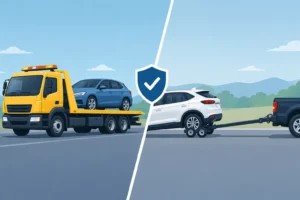
A recovery lorry carries your vehicle with all four wheels off the road. A flat bed is lowered or tilted, then an onboard winch brings the vehicle securely into position. Once loaded, the car, small van or motorcycle is strapped down for transport to its destination.
A tow bar keeps the recovered vehicle on the road behind another vehicle. That means its tyres, suspension, steering and brakes remain part of the journey. The driver in the towed vehicle must control it, react to traffic and maintain a safe distance from the towing vehicle. It can be demanding even over a short distance, particularly in poor weather, heavy traffic or at night.
The difference matters most when the vehicle is damaged or mechanically uncertain. A car that has suffered an accident may have hidden suspension or steering damage. A vehicle that has been standing for months may have seized brakes, flat tyres or an electrical fault. Loading it onto a recovery lorry avoids asking already compromised components to cope with a road journey.
When a tow bar may be suitable
Tow bars are generally best reserved for short-distance recovery where the vehicle is roadworthy enough to roll, steer and brake, and where the drivers understand the rules and risks involved. This might be moving a functioning car off a private site, or taking a recently failed vehicle a very short distance to a nearby repairer.
The towed vehicle must have a driver unless it is a specific legal exemption or recovery arrangement. Its lights need to be considered, particularly if visibility is poor, and the towing vehicle must be suitable for the load. The tow bar itself must be correctly fitted and rated. A poorly matched or badly connected bar can become dangerous very quickly.
There are also practical limits. A tow bar does not help much with a car that will not roll freely, a vehicle with accident damage, a locked wheel, a missing key or a flat battery combined with an electronic parking brake issue. It is equally unsuitable for many automatic cars, electric vehicles and four-wheel-drive models, where incorrect towing can cause expensive drivetrain damage. Always check the manufacturer’s guidance for the specific vehicle before towing it.
Cost can make a tow bar look attractive, but it is worth looking beyond the initial price. One damaged bumper, failed gearbox or unsafe roadside incident can cost far more than arranging insured transport from the start.
Why a flat-bed recovery lorry is usually safer
With a professional recovery service, the vehicle is transported rather than pulled. It does not need a working engine, gearbox, steering system or brakes to complete the journey. An experienced operator can winch a non-runner onto the bed, using the appropriate loading approach for its condition.
This is particularly valuable for accident-damaged cars, classics, prestige vehicles and newly purchased vehicles that you have not inspected in person. A flat bed also removes mileage from the journey. That matters if a car is uninsured, untaxed, awaiting repair, has a mechanical concern, or simply needs to arrive in the same condition it left.
A recovery lorry is also far better suited to longer distances. Towing a vehicle from Essex to another part of the UK can be tiring, slow and exposed to changing road conditions. Transporting it on a flat bed provides a controlled, direct door-to-door service instead. It also avoids adding wear to tyres, wheel bearings and driveline components.
At Car Delivery Essex, flat-bed recovery lorries with onboard winches are used to handle roadworthy vehicles, non-runners, rolling shells and difficult recoveries. Vehicles are carried under insured transit, with time- and date-stamped digital condition reporting available through the moDel app. That provides useful reassurance when a valuable vehicle, fleet asset or online purchase is changing hands.
Vehicles that should normally go on a flat bed
If the vehicle has been in an accident, will not start, has damaged wheels or suspension, or cannot steer and brake reliably, a flat bed should be the default choice. The same applies to vehicles with an automatic gearbox where towing restrictions apply, electric vehicles with manufacturer-specific recovery instructions, and classic cars where avoiding unnecessary stress is part of protecting their value.
A flat-bed service is also the sensible option for motorcycles. A motorbike cannot simply be pulled behind another vehicle on a tow bar. It needs proper securing points, suitable straps and careful loading so it arrives upright and protected.
Legal and roadside safety considerations
Towing is not just a matter of attaching a bar and setting off. UK road traffic rules require the towing setup to be safe, the vehicles to be roadworthy for the purpose, and the drivers to have proper control. A towed vehicle that cannot display required lights, has defective brakes or cannot be safely controlled presents a serious problem.
Motorways add another layer of risk. Stopping on a live carriageway or attempting improvised recovery from a dangerous location is not worth it. If you are stranded in a vulnerable position, get yourself to safety where possible and arrange professional assistance. Tell the recovery operator exactly where you are, the vehicle registration, its condition and whether it can roll or steer. Clear information helps the right vehicle and equipment arrive first time.
Insurance is another point often overlooked. Your motor policy may not cover damage caused while towing, and it may have conditions around the type of recovery being carried out. Professional transport provides a clearer process, with the vehicle handled as a consignment rather than as an improvised roadside arrangement.
Choosing the right option for your situation
For a short move of a sound vehicle on quiet roads, a correctly fitted tow bar may be practical. It still requires confidence, care and compliance with the vehicle manufacturer’s instructions. It is not the best answer merely because the vehicle starts, particularly if there are warning lights, brake concerns or accident damage.
For anything more complicated, a recovery lorry removes the uncertainty. It is usually the better option for breakdowns away from home, vehicle purchases from eBay or dealerships, end-of-lease collections, fleet transfers, relocations and deliveries to garages. It is also the safer call when you cannot verify the vehicle’s mechanical state.
When requesting a quote, give the collection and delivery postcodes, vehicle make and model, whether it starts and rolls, and any known damage or access issues. Mention lowered suspension, locked wheels, missing keys, underground parking or narrow access. These details allow the recovery team to plan the job properly and quote accurately.
If there is any doubt about whether your vehicle can be towed without risk, treat that doubt as the answer. Arrange a properly equipped flat-bed recovery and get the vehicle moved safely, securely and without turning a manageable problem into a larger repair bill.

