
What Do Breakdown Recovery Costs Include?
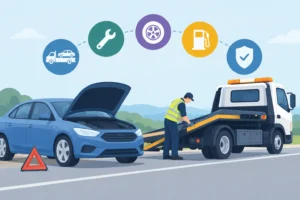
A car that will not restart on the hard shoulder, outside your home or in a supermarket car park creates one immediate question: how much will it cost to get it moved safely? Breakdown recovery costs can vary sharply, but the right recovery operator should explain the price before loading your vehicle – not leave you trying to work it out after the job is done.
For private owners, a breakdown can be stressful enough without vague charges. For dealerships, fleets and leasing companies, an unexpected recovery can disrupt deliveries, customer handovers and workshop schedules. A clear quote gives everyone a proper basis for making a decision.
What affects breakdown recovery costs?
The biggest factor is usually the distance between the collection point and the delivery address. Recovering a vehicle a short distance to a local garage is different from transporting it from Essex to another part of the UK. Longer jobs involve more driving time, fuel, road costs and lorry availability, so mileage has a direct effect on the quote.
The vehicle’s condition also matters. A roadworthy car with a flat battery may be straightforward to collect. A non-runner with locked wheels, a damaged steering system or a vehicle parked in a difficult position needs more time and equipment. Flat-bed recovery lorries with onboard winches are designed for these situations, but winching or carefully loading a heavily damaged vehicle can affect the cost.
Access is another practical consideration. A vehicle stranded on a wide driveway is normally simpler to load than one in a tight underground car park, a narrow residential street or a busy roadside location. Recovery operators need enough room to position the lorry safely, use the winch and protect other vehicles, kerbs and property.
Urgency can change the price too. A pre-booked daytime collection offers more flexibility than an urgent evening, overnight, weekend or bank holiday recovery. That does not mean urgent assistance should be overpriced, but immediate dispatch requires a vehicle and driver to be available at short notice.
The charges you may see in a recovery quote
A straightforward quote will generally be built around a call-out or minimum recovery charge, then the transport distance and the work required to load the vehicle. If you are comparing prices, ask what is included rather than focusing only on the first figure given.
The call-out element covers sending a recovery lorry and trained driver to you. It may also account for local travel to reach the vehicle, basic loading preparation and the time reserved for the job. Some firms quote a fixed local recovery price, while others use a minimum charge plus mileage. Neither approach is automatically better – it depends on where the vehicle needs to go.
Mileage charges normally cover the journey from collection to delivery. In some cases, the provider may calculate mileage from its operating base or include an allowance for the return journey. Ask this directly if it is not clear. A competitive quote should be understandable, not a surprise when the invoice arrives.
Additional work can include winching a non-running vehicle onto the flat bed, dealing with wheels that will not roll, moving a vehicle from an awkward location or waiting at a garage, dealership or storage site. If the vehicle has suffered accident damage, explain this when requesting a quote. A recovery company can then send the suitable equipment and allow the correct time.
There may also be charges for tolls, congestion-related routes, ferry crossings or secure storage where these are required. These are not part of every job, but they should be discussed upfront on longer-distance or time-sensitive moves.
Why the cheapest recovery price is not always the lowest cost
A low headline rate can look tempting when you need help quickly. However, it is worth checking whether it includes insured carriage, suitable loading equipment and delivery to the actual destination. A vehicle that is merely towed to the nearest safe place may still need a second transport job to reach your chosen garage, home or dealer.
Using the wrong equipment can create risk, especially with accident-damaged cars, low-clearance vehicles, classics, motorcycles and vehicles that cannot be driven. A flat-bed lorry keeps the vehicle off the road during transport and allows controlled loading with an onboard winch. For many recoveries, that is safer than trying to tow a vehicle that has unknown mechanical or suspension damage.
Insurance matters as much as the collection price. Check that the operator has proper cover for the vehicle while it is being transported. This is particularly relevant for valuable classics, recently purchased cars, fleet vehicles and motors being returned at the end of a lease.
Condition reporting is another useful safeguard. Time- and date-stamped photographs taken at collection can record the vehicle’s visible condition before it moves. This is not just useful for commercial customers. If you have bought a car online, are sending a vehicle to a repairer or need an accident-damaged vehicle transported, documented checks provide reassurance for all parties.
How to get an accurate recovery quote quickly
The fastest way to receive a realistic price is to provide the details that affect the job. You do not need technical knowledge, but being clear about the vehicle and its location helps the recovery team plan properly.
Have the registration number, make and model ready, along with the full collection and delivery postcodes. Explain whether the vehicle starts, rolls and steers. If it does not, say why if you know – for example, flat tyre, failed clutch, accident damage, seized brakes or missing wheels. Mention any access issues, such as a height barrier, tight lane, gated site or basement car park.
Photographs can be particularly helpful where there is damage or restricted access. They allow the operator to assess whether a standard flat-bed recovery lorry can load the vehicle safely, whether winching is needed and how long the collection is likely to take. Honest information at the start prevents delays on arrival and protects the quoted price.
It is also sensible to confirm the destination’s opening times. There is little benefit in recovering a vehicle promptly if the garage is shut and cannot accept it. If delivery cannot be made straight away, ask whether secure vehicle storage is available and what the daily charge would be.
Recovery cover versus pay-as-you-go transport
Breakdown membership can be useful, but it does not always cover every situation. Policies often have limits on distance, number of call-outs, vehicle type, destination or onward travel. Some only recover the vehicle to a nearby garage, while others include national recovery after a breakdown far from home.
If your cover is active and the incident falls within its terms, using it may reduce your immediate outlay. If you need a specific collection time, transport to a particular address, movement of an unroadworthy vehicle or delivery of a recently bought car, an independent recovery and transport service may be the more practical option.
For businesses, planned vehicle movements and emergency recoveries should be treated differently. A scheduled stock transfer can often be priced competitively because the timing is flexible. A same-day recovery for a broken-down fleet vehicle may cost more, but it can prevent greater losses from missed appointments, replacement hire or a vehicle left in an unsuitable location.
Questions worth asking before you book
Before authorising a recovery, confirm whether the quoted price includes collection, loading, transport and delivery to your chosen address. Ask if there are likely to be extra charges for mileage, winching, waiting time, tolls, out-of-hours work or storage. You should also check that the vehicle is insured in transit and that the operator can handle its condition.
If a quote seems unusually cheap, ask what happens if the vehicle will not roll or access is more difficult than expected. A professional operator will not promise the impossible, but they will explain the options clearly. The aim is to send the right lorry first time and get the vehicle moved without creating further damage or delay.
Car Delivery Essex provides insured flat-bed recovery and vehicle transport for cars, small vans, motorcycles, classics and non-runners, with winch-equipped lorries for difficult collections. Whether the job is a local recovery or a nationwide delivery, a direct phone quote based on the actual vehicle and route is the best way to keep the cost clear from the outset.
When your vehicle is stranded, the useful question is not simply who can arrive first. It is who can safely collect it, explain the price plainly and deliver it where it needs to be without adding avoidable problems.

