
What Affects Car Moving Costs? A Clear UK Guide
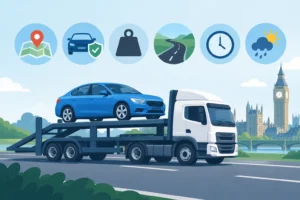
A £100-looking job can become a very different quote once a vehicle will not start, sits behind a low archway, or needs collecting at short notice. That is why understanding what affects car moving costs matters before you book. A proper vehicle transport quote is not just about miles on a map. It reflects the lorry, equipment, time, route and level of handling needed to move your vehicle safely from door to door.
For a straightforward, roadworthy car collected from an accessible address and delivered on a flexible date, costs are usually easier to keep down. A non-runner, damaged car, classic vehicle or urgent recovery needs more planning and specialist equipment. The right provider should explain the difference clearly, rather than give a low headline figure that changes on collection.
What affects car moving costs most?
Distance is normally the starting point. Longer journeys mean more fuel, driver hours, road charges and wear on the recovery lorry. A local collection in Essex may be priced very differently from a delivery to Scotland, Cornwall or Wales.
But distance is not the whole story. A 30-mile collection involving a vehicle with locked wheels and difficult access can take more time than a 150-mile motorway run with a fully roadworthy car waiting on a wide driveway. When comparing quotes, make sure the transporter knows the full situation, not just the collection and delivery postcodes.
Collection and delivery locations
Postcodes help plan a route, but access at each end matters just as much. A flat-bed recovery lorry needs safe room to approach, load and leave. Narrow country lanes, height restrictions, tight cul-de-sacs, underground car parks and busy town-centre streets can all affect the work involved.
If the vehicle is at a dealership, auction site, garage, residential address or storage compound, say so when requesting a quote. Collection rules, opening hours and waiting time can vary. The same applies at delivery. A car being dropped at a home with a steep drive or limited turning space may need a different unloading plan.
London and other congested areas can also add costs through traffic, restricted routes, clean-air charges, tolls or parking arrangements. These are not reasons to avoid a collection. They are simply details that need to be allowed for properly from the start.
Is the vehicle roadworthy, damaged or a non-runner?
Vehicle condition is one of the biggest factors in a transport price. A car that starts, steers, brakes and rolls freely can usually be loaded quickly. A non-runner often still presents no problem, but it requires a winch-equipped flat-bed lorry and more careful handling.
Be clear about any issues: flat tyres, seized brakes, a missing wheel, accident damage, a snapped suspension component, no keys or an electronic handbrake that will not release. A rolling shell and a vehicle with wheels that turn are very different jobs. So are a car that has simply failed to start and one that cannot be moved without additional equipment.
This information protects you as well as the transporter. Sending the right vehicle and equipment avoids a failed collection, a delay at the roadside or an unexpected charge once the driver arrives.
Vehicle size, weight and type
Most standard cars can be moved on a flat-bed lorry without difficulty. Larger SUVs, long-wheelbase vans, modified vehicles and heavily loaded vehicles may need more capacity or a different loading arrangement. Motorcycles need secure restraint points and careful positioning, while classic cars often require extra attention to ground clearance, delicate trim and long-term mechanical condition.
Low vehicles are another example. A sports car with reduced suspension may need suitable ramps and a cautious loading angle. An accident-damaged vehicle may need to be pulled on by winch rather than driven. These are practical considerations, not unnecessary extras, and they influence the time and equipment required.
Timing can change the price of moving a car
Flexible bookings are often the most cost-effective. If a transporter can combine your move with another vehicle collection on a similar route, the journey becomes more efficient. This can be particularly useful for nationwide car delivery, dealership stock movements and online vehicle purchases where the date is not fixed to the hour.
Urgent work is different. Same-day collection, an out-of-hours recovery, a weekend request or a strict timed handover may require a dedicated journey and immediate driver availability. That naturally costs more than a move planned several days ahead.
There is a trade-off here. Waiting for a flexible slot may reduce the price, but it may not suit a buyer who needs an eBay vehicle collected promptly, a dealership awaiting stock, or a motorist stranded after a breakdown. A good quote should give you a realistic collection window, not a promise that cannot be met.
Seasonal demand and weather
Demand can rise around bank holidays, school holidays, month-end registration periods and busy dealership trading dates. Poor weather may also slow routes or make some collections more difficult, particularly on rural roads. Ice, flooding and high winds can affect safe loading and travel times.
This does not mean every quote rises when the weather changes. It does mean that availability can be tighter, especially for urgent work. Booking early gives you more choice of dates and usually makes route planning easier.
Insurance and condition reporting are part of the value
The cheapest quote is not always the best value if it leaves questions over cover, vehicle condition or responsibility in transit. Ask whether the vehicle is carried under suitable insurance and whether the provider can document its condition at collection and delivery.
Photographs, time-stamped reports and a record of visible damage provide reassurance for private owners, dealerships and fleet operators alike. This is especially useful for newly purchased cars, classics, leased vehicles and accident-damaged vehicles where condition needs to be clear before movement.
At Car Delivery Essex, practical recovery capability is backed by insured carriage and digital condition reporting through the moDel app. It means the vehicle’s visible condition can be recorded before transport rather than relying on memory after the fact.
Dedicated transport versus shared routing
A dedicated vehicle move means the lorry is assigned around your collection and delivery requirements. It is often the right option for urgent recoveries, exact-time handovers, difficult vehicles or high-priority commercial work. You are paying for direct availability and a tighter schedule.
Shared routing can be more economical where dates are flexible. The transporter may collect or deliver other vehicles along a sensible route, reducing the cost allocated to each job. It can take longer, so it is not ideal when a vehicle must arrive at a particular time.
Neither option is automatically better. The sensible choice depends on how quickly you need the vehicle moved and whether certainty of timing matters more than the lowest possible price.
How to get an accurate car transport quote
A clear quote starts with clear information. Provide the collection and delivery postcodes, vehicle make and model, registration if available, and your preferred dates. Then explain whether it starts, rolls, steers and brakes. Mention damage, low clearance, missing keys, tyre issues and any access restrictions before booking.
It also helps to say why the vehicle is moving. A broken-down car may need immediate recovery. A classic car may need careful planned transport. A dealer transfer may need proof of collection and delivery. The service can then be matched to the actual job rather than guessed from a postcode alone.
Avoid accepting a vague price without confirming what it includes. Check whether the quote covers collection, loading, delivery, insurance, any known road charges and the stated vehicle condition. If something is uncertain, ask the question before the lorry is dispatched.
A fair vehicle-moving cost is the one based on the real job: the vehicle, the route, the access and the urgency. Give those details upfront, and you can arrange safe, insured transport with fewer surprises when it matters most.

